

Taylor Swift is accused of causing inflation. She also represents an innovative organization worth more than US$1,000,000,000. Beyond this high-level perspective on her impact, many teachers are using her career to demonstrate old economic ideas more memorably. Some instructors offer entire courses in university [1] [2] [3] [4] [5] and at the high school level. While economics classes may base lessons on a manufacturing process which turns “labour” and “capital” into “widgets”, the music and entertainment industries are big businesses.
In Korea, for example, musical talent is managed and trained from a surprisingly young age. TV franchises such as The Voice and Idol attract large audiences in many countries. I am also sure that these features oversimplify the forces acting on Taylor Swift and other musicians.
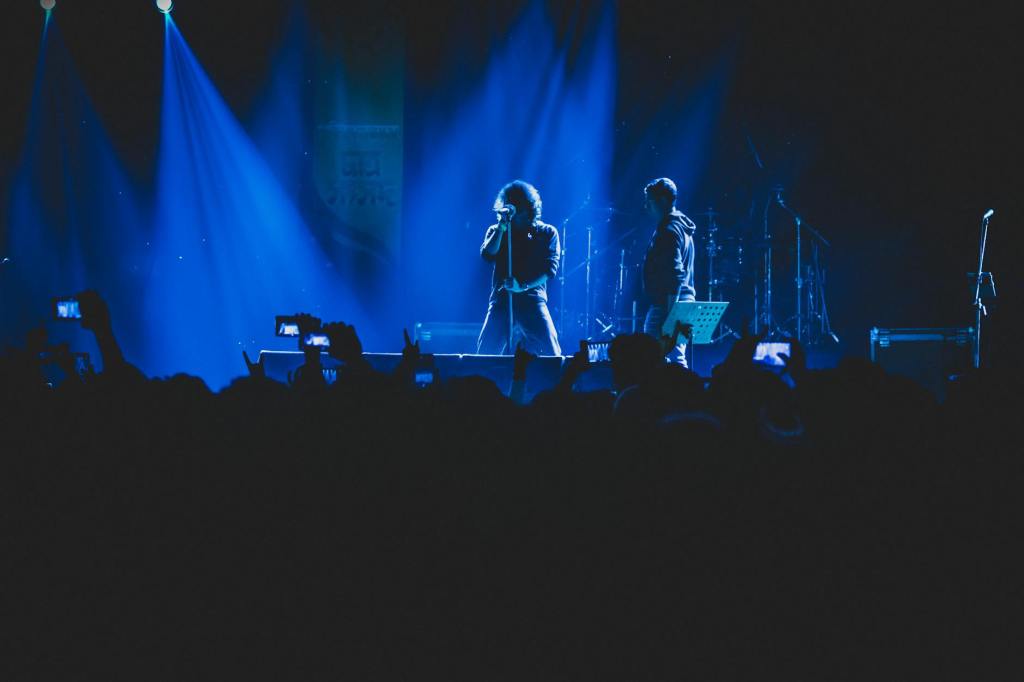
Others know more about the behind-the-scenes organizations which help an entertainer attract large audiences: e.g., hiring dancers and technicians; ensuring not bottlenecks in the supply chain needed to get the branded merchandise to each tour location in sufficient quantities; hiring and managing the people who check tickets and sell snacks, and so on. It is obviously a large international business with all of the associated challenges.
Since this blog aims to demonstrate that much economic insight can be found by applying five basic principles, please consider the following thoughts on looking past the simplifications:
- Margins:
- Going to a concert may seem like a Yes/No decision but there are many margins to consider. For example, which type of ticket to buy (near the stage or far away?) or how many souvenirs to buy at the concert? Some fans can also choose where to go.
- Which songs should the singer sing during a concert and how many? Even for popular songs, the performers who work with Swift must get tired of hearing the same songs day after day after day. Also, long shows require more effort. In other words, “diminishing marginal benefit” and “increasing marginal cost” are relevant considerations.
- The success of a song is not just about words and notes on a song sheet. For example, one should also consider the associated music videos (including clothing, style, length, …) and promotion activities using social media (which one, how often?).
- The size of a venue does not represent a “capacity constraint” on satisfying fans: Swift could stay in town for more days, until every fan in that town is satisfied (and some fans multiple times). So, how would you decide when to leave one city and move to the next city?
- Opportunity Cost:
- How many Starbucks lattes must a fan forego to pay for the lowest price concert ticket? How many hours of work (at the minimum wage) would be needed to pay for the lowest price concert ticket?
- Consider the consequences for musicians with middle level talent. On average, does a Swift concert suck so much money out of the budgets of music fans that little is left over to attend concerts by other musicians? An alternative possibility is that other musicians benefit by being featured as a local attraction to the main tour or that some other aspect of the fan’s financial budget is sacrificed.
- Equilibrium:
While many people are content to comment on the price of a ticket and the willingness of fans (i.e., their tastes and income) to pay for a ticket, economists tend to focus on the price mechanism. Are ticket prices so high that “nobody can afford to go to a concert”? That statement is clearly false: many people pay the official ticket prices and some people pay extra to scalpers or resellers.

- So, a better question asks: how is excess demand rationed if not by prices? An obvious answer is “first-come-first-served” which benefits some customers over other customers. This is non-trivial question for economists since musicians benefit by creating a culture which allows fans to interact with other fans (sources), there is some benefit to finding a way to ration without excluding too many of the fans with less money. Do you have any suggestions of how to ration effectively if not using prices?
- Given that some seats are closer to the stage than others, what price difference between the good seats and the not-so-good seats is appropriate?
- Assuming that ticket prices of a concert are different in different cities, can you think of any reasons (other than exchange rates) why they might differ? As a related question, if the concert tour includes 100 shows and if Swift is so popular than she can sell out any of them, why doesn’t her tour use only the 100 largest venues in the world?
Also, operating these places takes a lot of money every day even if it is not hosting a concert. What does the owner of that space do to cover costs?
- Swift may be a better-than-average singer, in terms of technique or skill but, in a superstar market such as the entertainment business, being 10 or 50 percent better does not necessarily equate to income which is 10 or 50 percent higher than the average. My guess is that paying her 10 percent more is not going to increase her quantity supplied by 10 percent. So, economists focus on the “marginal revenue product”: how much revenue can they generate for their employer? That revenue often depends on a ranking (i.e., #1, #2, #3, …) and not the actual difference in skill.
- What is the nature of the competition for space between, say, Beyonce and Swift? Many other famous musicians also have tours. They, as well as professional sports teams, prefer to use similar places (e.g., large stadiums near big cities). So, does competition for space explain the high ticket prices?
- Gains from Trade:
- Evidence says that Swift and her team are very good negotiators: she disrupted the normal relationship with music distributors [1] [2] by re-releasing old albums. A self-produced movie of the Eras Tour made a lot of money, and bypassed the big movie distributors to sell the movie to theaters directly.
- Comparative Statics:
- The economic impact of her tour on a city’s economy is claimed to be in the hundreds of millions of dollars. That claim may use flawed arithmetic. It is true that many fans are willing to travel long distances because they cannot see her show in their home town (either because of capacity limits in a home town or, equivalently, high prices). That is new money to businesses in that city (and a financial loss to the home town of those fans). But the spending by local fans is merely redirected to Swift and away from other spending options: if money is not spent on going to a Taylor Swift concert then the fan would still have the money in their wallet and it could be spent on many other things. Since some people are rationed out of going to one of her big concerts, how should we interpret souvenirs, such as t-shirts, playing cards, and multiple cookbooks? Are they a substitute or a complement good to the tour? In other words, would an increase in the ticket price for a tour cause fans to buy less of these souvenirs (due to an income effect) or buy more (as a substitute for those who choose not to go to concert, or to reinforce the memory of the experience)?
If you admit that you are a true fan of Swift then “thinking like an economist” on this topic may be hard, because it is tempting to rely on personal introspection. As with many other examples of market analysis, assuming that your tastes are similar to the “tastes” of the market is a very dangerous assumption. So, it may be better to consider how these puzzles apply to a different famous musician that you are indifferent to. Similarly, when looking for evidence to support a conclusion, beware of interviews conducted by journalists outside of the concert: the responses given by fans may be stated sincerely but the journalists are not asking the fans who, for one reason or another, were not willing to pay the price.
Now, it is your turn. Maybe, you are looking for an essay topic. Here are some worthy puzzles that may be more interesting than studying the demand curve for pizza when consumers can only spend their money on pizza and soft drinks.
- You might try to collect the evidence needed to measure the magnitude of each of the ideas I posed above. Then, for real insight, you might ask: what is it (precisely) that makes a difference in the magnitude between Swift and another musician?
- Without any evidence, I assert that the movie version of the Eras Tour is a substitute for the live version. Do you have any ideas on how to estimate the cross-price elasticity between these two “goods”? Also, why would any business increase its expenses in order to create a low-price competitor for its own (very profitable) concerts? (Answering this question may be challenge because nothing prevents a fan from attending a concert and seeing the movie.)
- What evidence would you need to distinguish between two explanations of why the price of concert tickets is high: because Swift is so popular or because the ticketing company has too much market power?
- It is tempting to describe Taylor Swift’s music as unique. As noted above, I could not recognize any musical innovation by her (or by anybody else) even if it were shown to me. It is also true that innovation is common in many markets, and competitors modify the innovations of others by using various margins of adjustment. So, it is interesting to ask: how is the next generation of musicians competing with the current generation? Are they copying what Swift has done or adding to her innovations?
- Who made the most money because of the highly publicized romance between Taylor Swift and the football star Travis Kelce: the National Football League or Taylor Swift or entertainment/sports journalists?
 5 Basic Principles of Economics
Leave a comment