
Some economic discussions start by assuming that the market in question is perfectly (or almost perfectly) competitive. Other discussions start by assuming that a firm is mostly monopolistic. Understanding the difference matters, for several reasons. There are examples of monopolists and of cartel agreements [1] [2] [3]. Other investigations are on-going while politicians ask for even more investigations [1] [2] [3] [4]. This post notes that clear thinking requires a deeper understanding of the sources of monopoly power, and that understanding involves some often-overlooked distinctions.
Suspicions
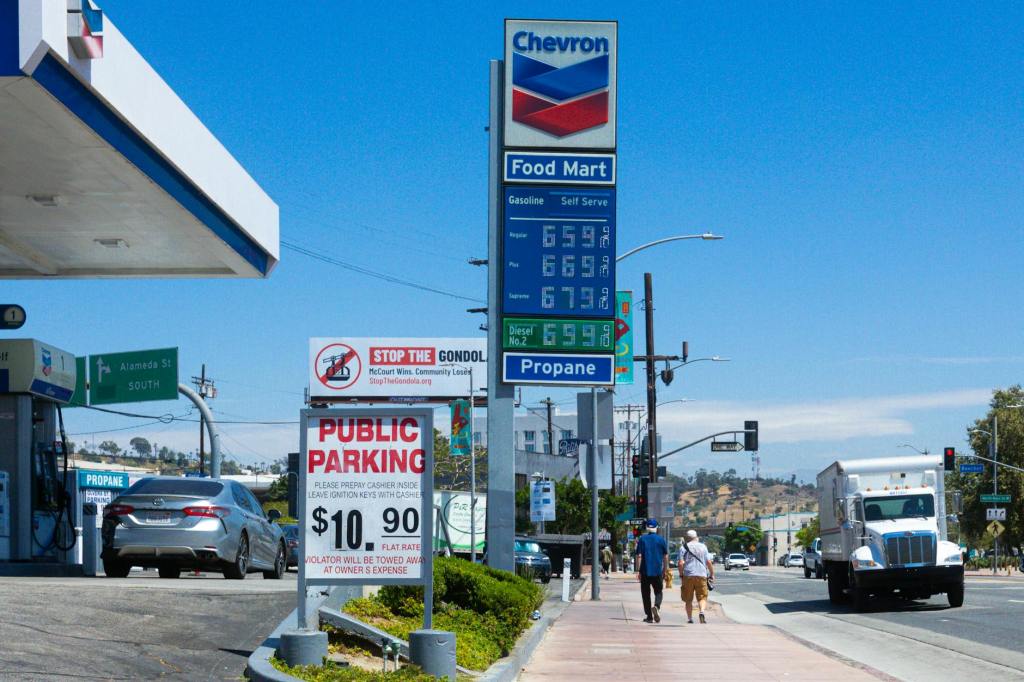
Many consumers think that evidence of “high prices” is proof that the seller is a monopolist. This thinking is so common that, concerning gasoline prices in particular, the government agencies in both Canada and the US which oversee the competitiveness of markets have specific discussions on the issue [1] [2] [3]. Their advice is that the “evidence” has more than one explanation: the fact that all gas stations raise their price at the same time could be due to coordination within a cartel but, if all sellers respond to the same market forces independently, then it would be very surprising (“suspicious”) if they did not change prices at the same time. In other words, the two simplest explanations lead to the same conclusion. “Ambiguity” and “suspicion” are not “Proof”: deeper insight is needed.
Any firm can fix its prices but, if consumers can choose amongst competitors, effective control of the market price by one firm requires something more. The best example of a monopoly used to be the market for wholesale diamonds. Unlike what is seen at any large shopping mall where a consumer can choose amongst many retail jeweler, one company (DeBeers) used to own nearly all of the diamond mines in the world. Since monopoly power is not inevitable or permanent, it is also instructive that, recently, new diamond mines have been discovered (including some in Canada) and the costs needed to manufacture jewelry-quality diamonds have fallen. New entrants reduced DeBeers’ power to set prices and quantity.
Evidence
Proving market power requires distinguishing between what happens in a competitive market and what happens in a monopolized market. A signed agreement to act like a cartel or a whistleblower would be solid evidence, but can be hard to find.
In many cases, distinctions are found by understanding the role of “barriers to entry”. These barriers are extra costs incurred by a new entrant, in addition to the usual costs of production and marketing born by every other seller. In some industries, the barriers to entry are low while, in other industries, high (e.g., R& D expenses, switching costs, or the extra risk if entry requires a large based on consumers quickly). Another word for these barriers is becoming increasingly common amongst financial analysts: does a firm have a wide “moat”, to use the analogy of a moat which protects a castle from attack?
Barriers come in several different forms and, especially in certain Canadian markets, an important form is government mandate. If you think that you want to farm eggs or chickens or want to sell milk, you need to talk with a “marketing board”. Notable marketing boards fix prices and allocate who can produce (and how much each producer can produce): e.g., milk, chicken. Check this for some history.
The outcome can seem similar to the outcome in a competitive market when competitors fight for a share of a consumer’s wallet, since the price seems to be set equal to an appropriate cost plus a reasonable profit margin. If you look carefully at how a board’s rules constrain that fight, the debate about practicalities of “appropriate cost” and “reasonable profit margin” may be less clear: what is the assurance on “appropriate”? reasonable to whom?
It is easy to talk about a competitive market. Government policy makers often struggle with the practical difference between “promoting competition” and “promoting competitors”, since promoting competition often helps some competitors and hurt others. A broader perspective teaches that clarity about whether a particular market is competitive (or not) focuses on whether existing competitors are disciplined by the threat of entry and by consumer choice.
Now, it is your turn to write.
- In your opinion, which goods or services or which locations represent excellent examples of monopolization? What are the most relevant barriers to entry?
- Why does the market for a “hot toy” at Christmas time not represent a monopolized market? Even if the government could do something about the lack of supply, which type of government policy would benefit society successfully?
- The market for maple syrup in Quebec seems to fit the pattern set by DeBeers, where a central authority could control the world price by using an inventory to adjust quantity supplied as needed. More than 10 years ago, the Great Maple Syrup Heist (when 2700 tonnes vanished from that “strategic reserve”) led to some changes. Is it a monopolist now?
FYI: Recent developments concerning the use or abuse of monopoly power by innovative tech giants (such as Google, Apple or Amazon) extend these ideas but the extensions are complicated. Stay tuned for future developments.
 5 Basic Principles of Economics
Leave a comment