
An all-you-can-eat restaurant seems like an obvious exception to the rules of basic economic logic, until you dig beneath the surface.
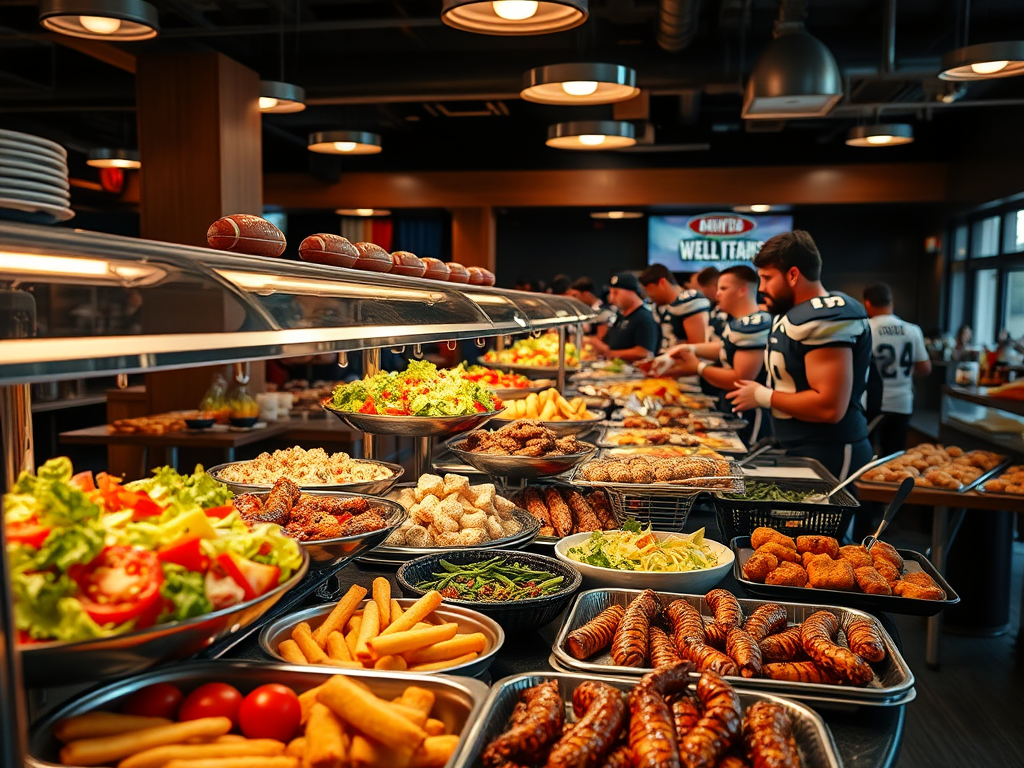
It seems that any restaurant which allows patrons to consume as much food as possible, without asking for more money, is either a charity or will go bankrupt. The example of a hungry football team may come to mind. The fact that chains of restaurants have used this business model for decades suggests that it survives the market test. In Hong Kong, for example, many upscale hotels https://www.peninsula.com/en/hong-kong/hotel-fine-dining/the-verandah-buffet use this business model for some of their restaurants.
Few restaurants are extraordinarily profitable, yet some do better than others. A chain of all-you-can-eat (AYCE) restaurants, which is popular in southern Ontario is instructive: Mandarin charges a franchise fee of $3,000,000. By comparison, the franchise fee for McDonalds is $700,000 and the fee for a Tim Horton’s restaurant is $100,000. Clearly, the owners and managers have found a solution.
The example of the football team is colourful but, because of the margins principle and the equilibrium principle, unconvincing.
Various sources note that food at an AYCE restaurant is arranged to encourage people to choose inexpensive, filling foods first (i.e., breads, rice, vegetables). When you return for seconds, you feel more full, put less on your plate and may not go back for thirds or fourths. And, you may want to check whether the size of the plates is smaller than what you use at home. Satiation is a colourful term, but differs little from the phrase economists use commonly: “diminishing marginal benefit”.
Some people are unhappy and want to get their money’s worth. Videos with hundreds of thousands of views offer advice. They prove that optimizing is not just “eating more” and that consumer behaviour is more complex than “price down implies quantity demanded up”.
While a football team may go to an AYCE restaurant, most customers are not football players: the market analysis must consider other segments. It seems to me that an AYCE restaurant is a poor choice for date night while the variety of food makes it a great choice for a family (including grandparents, young children, …). Since families talk with one another, less time is spent eating which leads to feeling full sooner.
Managing any restaurant is not just about price: costs need to be managed. Obviously, an AYCE restaurant needs less staff to bring food from the kitchen to the table and they do not rely on a famous chef to attract customers.
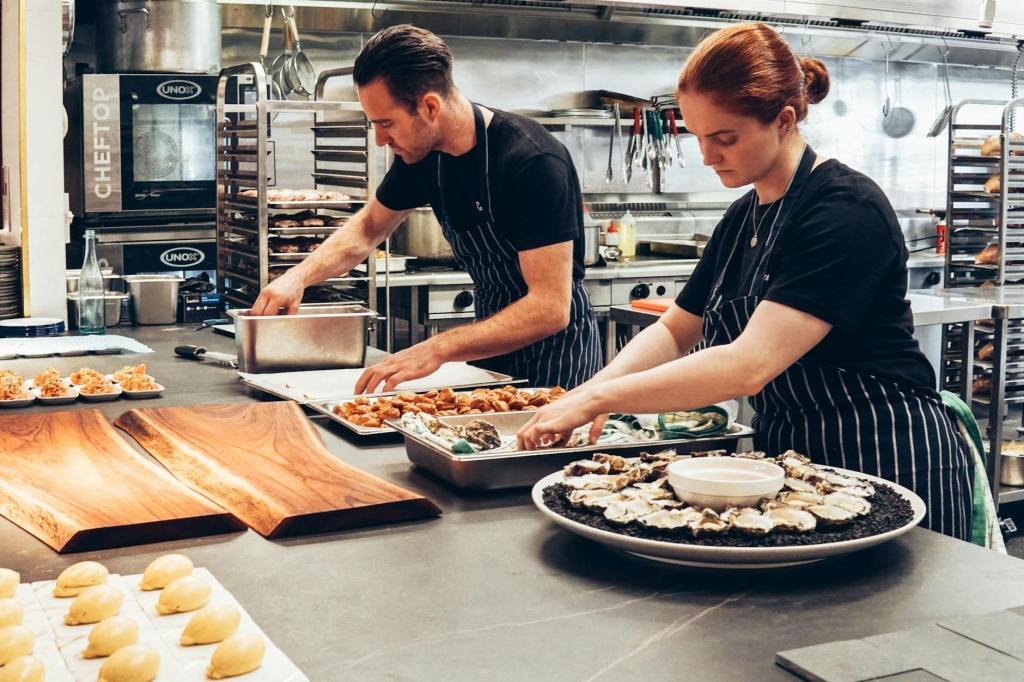
More subtle ways also exist. First, since dishes are not made to order, the kitchen staff need not wait. Second, since AYCE restaurants seem to be larger, you should think about economies of scale: e.g., 1/ less skilled chefs can specialize in preparing one or two types of food well; 2/ lots of customers means that the trays of food empty sooner, the hot food is hotter and the cold food is fresher.
Finally, a reminder that economists emphasize price as a tool to ration excess demand: there is a reason why some people avoid the steak and lobster dinner and choose a rice bowl with vegetables. Other tools can also ration:
- the cost of eating more includes an extra time cost. Some restaurants have a time limit.
- AYCE restaurants are very unhappy if you take home a “doggy bag”. Some threaten to charge a penalty if you leave too much food uneaten.
- for popular costly items, availability can be restricted.
- the price charged to customers passes the market test: if every customer ate as much as a football player eats (supposedly) then the cost would be high and the entry price would change accordingly.
The ultimate test of economic logic is that well-managed AYCE restaurants survive and thrive. Even if people do not eat as much as they claim to want, they enjoy the experience and return. So, if you think carefully, all-you-can-eat restaurants are a special case which confirm the basic principles of economics.
Now, it is your turn to write.
- Consider the problem of a salad bar, where the price paid is set by weight. What does the average person choose? Would the choices change if the price were set by volume? Is there evidence of different types of salad eaters?
 5 Basic Principles of Economics
Leave a comment