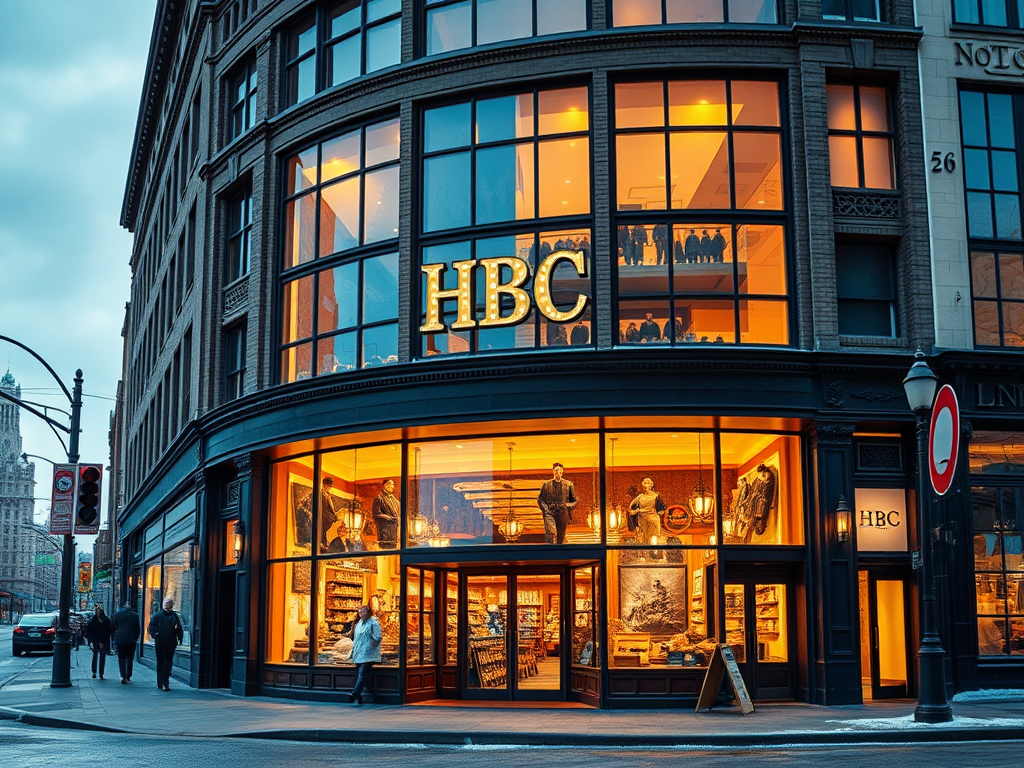
Recent news about the end of the Hudson’s Bay Company (HBC) emphasizes financial and related numbers: HBC lost about $330 million during the last 12 months; it owes at least $1 billion; 9,300 employees plus contractors will lose their jobs (income, benefits, …); 74 stores and 40 million sq. ft. of retail space will become vacant, … Students of business learn that economists think opportunity cost is, sometimes, more important than financial measures.
Companies can continue while losing money, even while having huge debts, if the challenge can be overcome by a competitive advantage or by managers making wise decisions that will pay off later. One business school in Canada is named after an entrepreneur who learned from a personal bankruptcy and, decades later, donated many tens of millions of dollars.
Founded in 1670, HBC has a history 200 years older than Canada. The current version of the company differs from the version that built trading posts and bought furs, when a Royal Charter gave it market power. Surviving for 355 years implies that the company’s managers overcame challenges in the past.
Could the current managers of HBC enable it to survive? Managers add value by acting in the gap between consumers, suppliers and employees. Some people may propose using innovative technology, but if it were that easy then somebody would have dethroned Amazon years ago. Hard decisions are hard because opportunity costs need to be considered.
Would changing the prices paid by consumers raise revenue? Some consumers may be loyal but the opportunity cost facing all consumers indicates that they can buy almost the same stuff elsewhere.
Would suppliers accept a lower price from HBC, if threatened by the end of HBC? A supplier wants to get their stuff to a final consumer not to a retailer. If their stuff is valued highly by consumers then a supplier can find another way to satisfy consumers.
Would the workers accept lower wages to keep their jobs? The opportunity cost facing an HBC worker is a job with another employer, especially when the disappearance of a large competitor means that some consumers will be looking for a new place to spend their money.
What about the building owners? Empty space incurs costs without generating revenue. Would owners accept a lower rent? Applying the logic of opportunity cost reveals that somebody else wants that space: as evidence, notice that the buildings used by formerly-famous retailers such as Eaton’s, Simpsons and Sears are now used by different companies.
HBC’s survival for 355 years represents a success, and bankruptcy is not necessarily a “mistake”. To paraphrase Seth Godin, a project that doesn’t work is not necessarily a mistake because failures can teach. A mistake often represents a failure to learn from past failures. HBC’s survival was never inevitable.
The opportunity cost of a decision is sometimes defined as the “next best alternative”. It should be identified and considered because, as a corporate bankruptcy teaches, that next best alternative may be chosen.
Now, it is your turn to write.
 5 Basic Principles of Economics
Leave a comment