
Economists often talk about how markets adjust to shocks with relative ease. Recent news offers three prominent examples of markets with excess demand: world oil and gas, reselling concert tickets, and college basketball. These examples are newsworthy for the same reason even if the “solutions” differ. Not everybody is happy with the “solutions” and that unhappiness offers lessons on the practicalities of rationing.
These examples require you to think about the equilibrium principle and compatibility. Thinking about selected individuals misleads because, when there is excess demand, it is impossible for everybody to be happy.
Oil and Gas Market
By now, you should know that restrictions on oil and gas shipments through the Strait of Hormuz reduced the daily supply to the world by about 20% suddenly. The previous equilibrium price became irrelevant. Involuntary reductions in quantity supplied create unhappy customers, and gains from trade opportunities:
- Since less is available, suppliers can select which consumers receive the limited quantity.
- In this context, a “black market” monetizes the gains from trade.
Given that the demand curve for oil and gas is inelastic in the short run, it is not surprising that the price of gasoline increased a lot. If the war continues for a long time then the quantity supplied of substitutes will increase.
Concert Tickets
Whenever a wildly event is in town, such as Taylor Swift (November 2024 in Toronto), World Cup of Soccer/Football, BTS (August 2026 in Toronto), the media write stories about avid fans who are angry at the prices charged by resellers: “It’s unfair!!!”
Very popular events have excess demand because, even with 50,000 seats per night at Rogers Stadium, there are more fans than seats at the ticket price chosen by the organizer of the event. For people who are lucky enough to get a ticket, there is an opportunity to profit. Some people would resell because the profit is large while other people value the experience more than the profit. These facts are evidence of excess demand at the ticket price and of luck when distributing tickets. So, the Government of Ontario is thinking of limiting the resale price to 150% of the ticket price.
The government’s proposal focuses on a symptom and seems to lack imagination. For example, if I managed a hotel or limousine, I would be happy to accept the listed price of a ticket from any customer who was willing to pay $2000 per night for a hotel room or door-to-door service. Similarly, some credit card companies have negotiated privileged access for selected clients. Black market solutions are possible, or extra administrative fees.
NCAA Basketball
Some people think basketball is the greatest sport in the world and college basketball is the best version of it. To the NCAA’s credit, the final and semi-final games of Men’s March Madness will be played in a stadium that seats 70,000, which helps with the quantity supplied aspect of an excess demand problem.
A recent EconTalk podcast discussed how tickets to students are rationed when University of North Carolina visits Duke University. I encourage you to listen to this very entertaining hour-long dissection of the process.
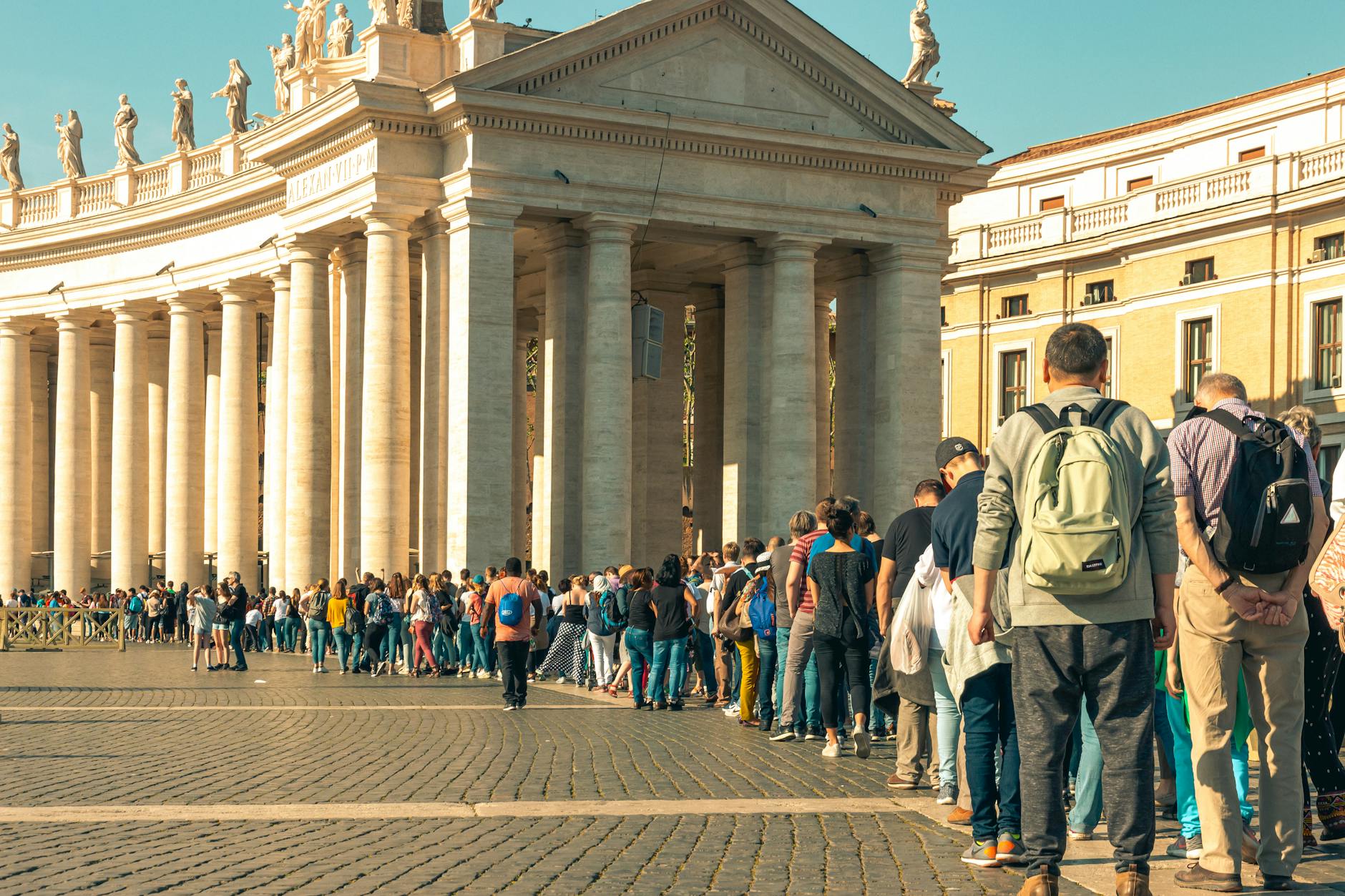
9,314 seats are available. Millions of dollars in revenue are at stake for this one game, but allowing prices to clear the market would enable alumni to outbid students for a “university event”. Undergraduate student tickets are free and allocated on a first-come-first-served basis. The line up starts in January or February, weeks before the game.
Replacing the price mechanism introduces practical administrative difficulties.
1/ Ideally, which type of fan would you want to attend?
Answer: Not an above-average fan. The most avid!
Follow-up question: Without using prices, how would you identify those individuals?
Answer: Ummmm. … We need a test more complicated than a Yes/No question such as “Do you like basketball a lot?”
2/ Lining up for tickets means being outdoors. Students need to sleep and go to classes. So, the rules of the line cannot be too strict. So, maybe, the wait should not be too uncomfortable. Yet, the real problem never changes: the number of student seats is fixed. If waiting becomes more comfortable then more people would line up and would line up earlier: i.e., some rules of rationing make the problem look worse!
The podcast ends by noting that Duke University may have found other ways to monetize the gains from trade.
These three examples share a common problem (i.e., mismatch between total quantity demanded and total quantity supplied) and different solutions. If so then which differences are substantial and which are superficial?
 5 Basic Principles of Economics
Leave a comment