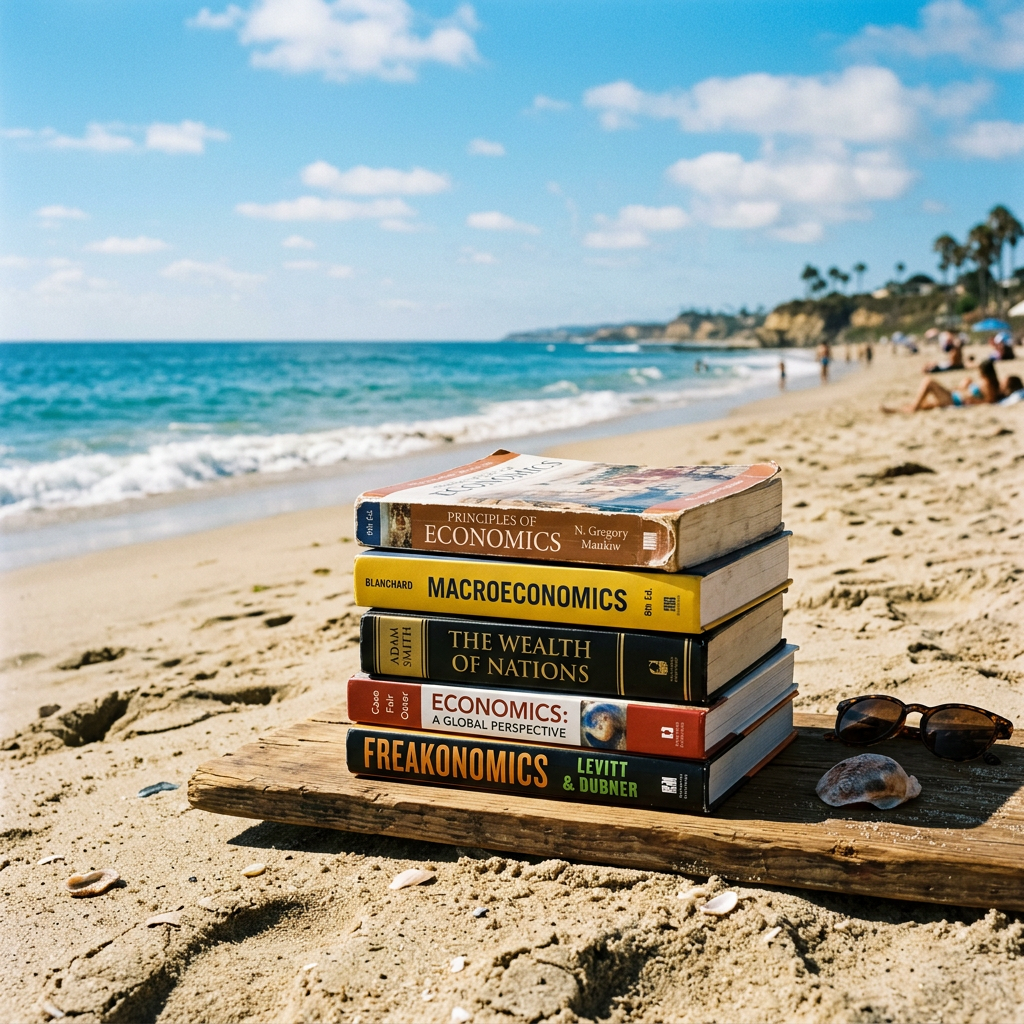
This post honours three occasions: the coming of summer (and the tradition of summer reading), the birthday of Adam Smith (more accurately, his baptism on June 16, 1723), and the 250th anniversary of the publication of An Inquiry into the Nature and Causes of the Wealth of Nations.
Adam Smith is seen as the father of political economy which, due to increasing specialization of Science over time, makes him a father of economics and of political science. This book is not an easy read because, even if the style of writing is perfect English (and easier to read than the Shakespearean style from 200 years earlier), the style and examples are suitable for readers 250 years ago. The evolution of writing style, and of Science, means that ideas considered to be “basic principles” now and applications used every day now (such as a “downward sloping demand curve”) are stated unclearly, indirectly or imprecisely. Therefore, some people say that this book is quoted more often than read.
Parts of it are worth reading, because the quotes are many and very instructive. The book is so old that it is no longer covered by copyright: it can be downloaded for free, if you know where to look. You can decide which parts you want to read since the chapter titles are so long that they seem to be a summary of the main point.
But, we feel time pressure more acutely now and you may not want to read the whole thing. Maybe, you would prefer to hear digestible summaries and expert discussions, during a long summer drive or when resting on a beach somewhere. With that goal in mind, I recommend the following podcasts.
Freakonomics
- Part 1: https://freakonomics.com/podcast/in-search-of-the-real-adam-smith/
- Part 2: https://freakonomics.com/podcast/was-adam-smith-really-a-right-winger-update/
- Part 3: https://freakonomics.com/podcast/can-adam-smith-fix-our-economy/
- See also sources and extra readings listed at end of each webpage.
EconTalk
- https://www.econtalk.org/adam-smiths-warning-about-wealth-fame-and-status-with-ross-levine/
- https://www.econtalk.org/extra/smith-lessons-what-ive-learned-from-adam-and-vernon/
- And many others https://russroberts.info/topics/adam-smith/
In Our Time (BBC)
- https://www.bbc.co.uk/programmes/b052ln55
- See also sources and extra readings listed at end of the webpage.
However you spend your summer, I hope that it is both enjoyable and productive.


Leave a Reply